Technical study
This editorial study records a proposed direction, its assumptions, and the tradeoffs that would need validation during product discovery and engineering design.
Executive summary
Nexus is a concept for a workspace that brings project state and operational context together. This study outlines a possible architecture and product boundary; no application, implementation, or customer outcome is claimed.
Context and background
Teams often coordinate project work across separate task lists, status documents, and conversations. A shared overview can help, but only when it links each summary back to a clear owner and source of truth.
The concept is a prompt for discovery, not evidence of a validated user need. A real engagement would begin by mapping roles, current tools, and the cost of handoffs.
Problem statement
The design question is how to help a team understand what is happening across active work without creating another disconnected reporting layer.
Goals and requirements
A proposed first release would prioritize a small set of testable workflows:
- Give each project a visible owner and lifecycle state.
- Let people move from an overview into the records behind it.
- Keep updates attributable and accessible to the right team members.
- Avoid presenting derived metrics without clear definitions.
Solution approach
Separate the workspace into project records, membership and access, status events, and read models for summary views. This keeps operational records authoritative while allowing the overview to be optimized for scanning.
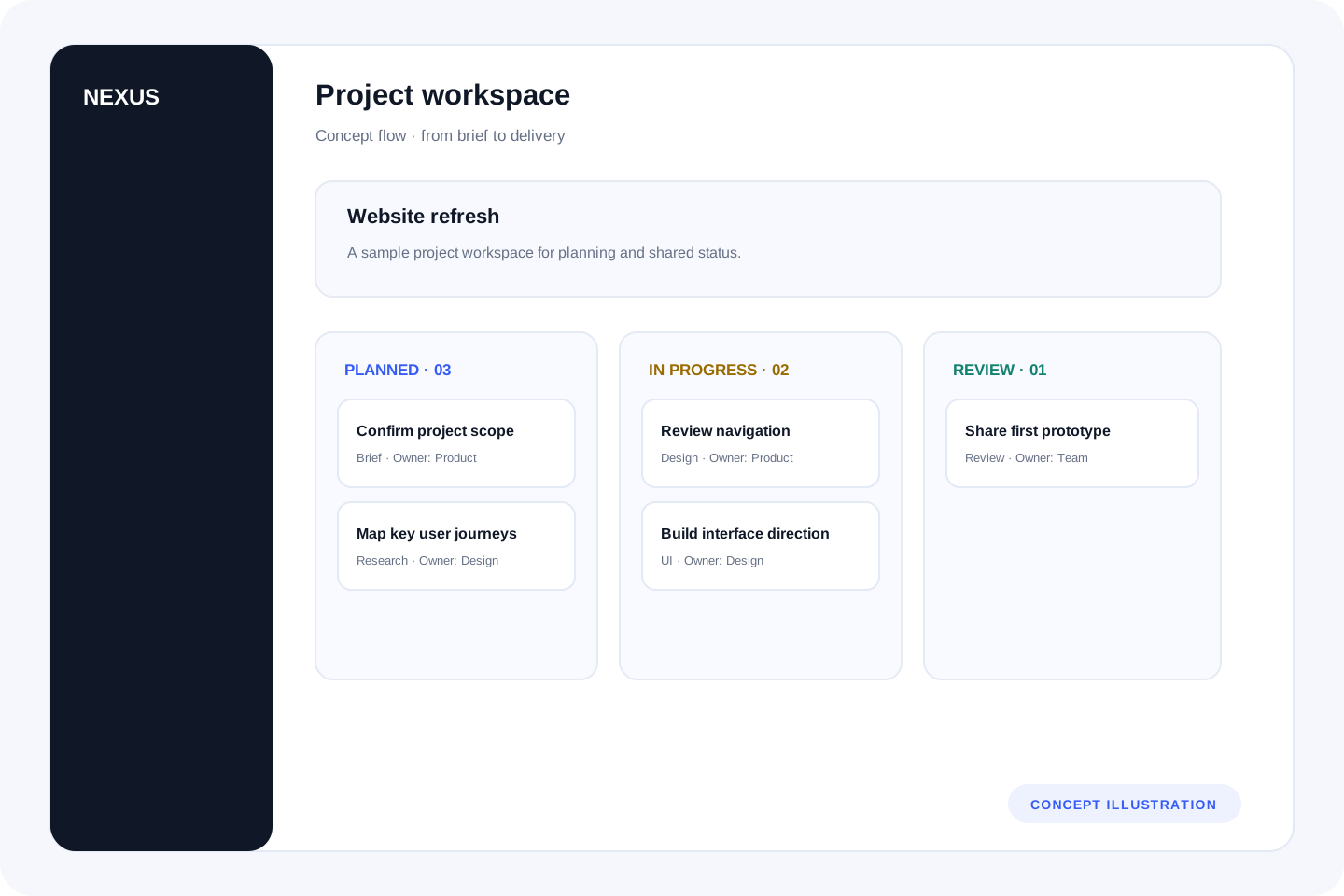
Start with a narrow role model and explicit state transitions. Add collaboration and integrations only after observing how a team uses the first workflow.
System architecture
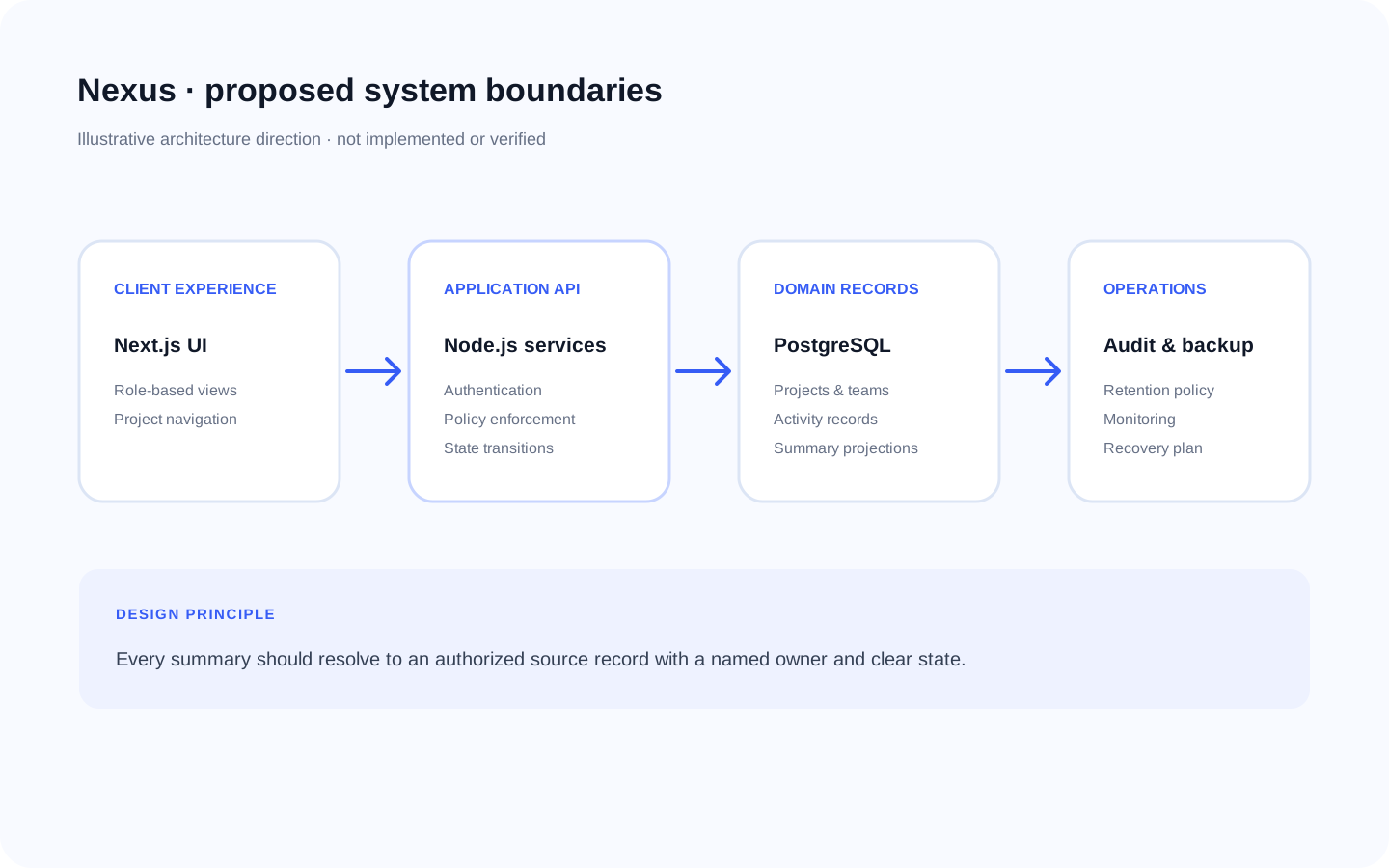
A possible implementation could use a Next.js interface, a Node.js API boundary, and PostgreSQL for durable project and activity records. This is a proposed stack based on the concept labels, not a verified deployed architecture.
A production design would still need decisions about authentication, tenancy boundaries, audit retention, background work, backups, and operational ownership.
Technical implementation
Model projects, memberships, and activity as separate entities. Define authorization at the API boundary and apply it consistently to both detail reads and aggregate views. Prefer explicit status events over overwriting history when teams need an audit trail.
Engineering decisions
Keep source records authoritative and calculate summary values from documented definitions. Use server-rendered views for public content and introduce client-side state only for filters and workspace interactions.
Challenges and tradeoffs
More visibility can create notification noise; more configurable workflows can burden setup. A useful product would test a small default workflow first, then add configuration only where teams repeatedly need it.
Outcomes and learnings
This is a solution blueprint, not a completed implementation. There are no production results, user research findings, or business metrics to report. The main design learning is to make every overview traceable to an owner, a lifecycle state, and the underlying record.
Visual explanations
Supporting concept visuals
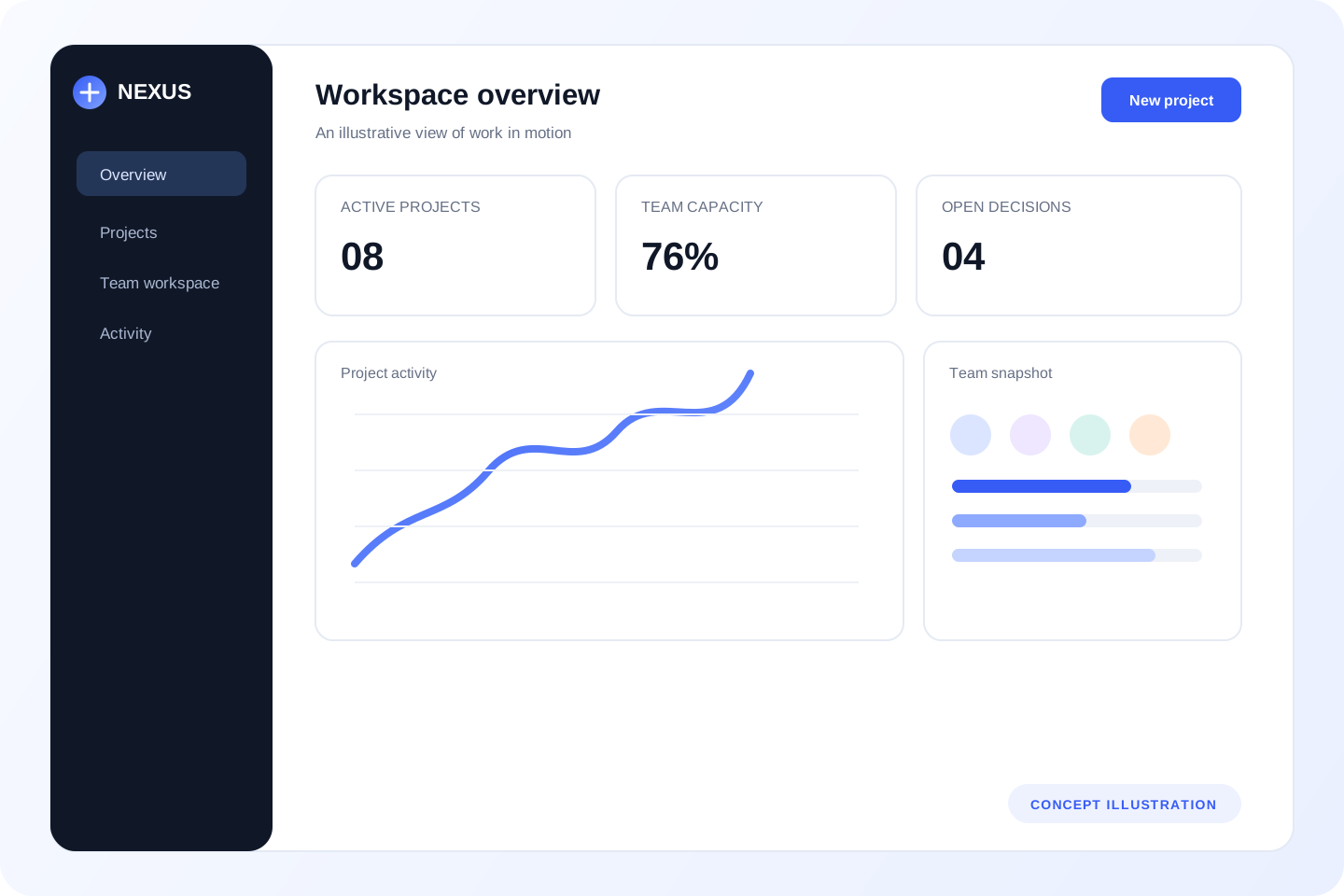
These original diagrams and interface illustrations explain the proposed direction. They are not screenshots of a delivered system.
Engineering decisions
- Keep operational records separate from overview projections.
- Apply access checks to aggregate and detail queries.
- Represent meaningful state changes as attributable events.
Tradeoffs to validate
- A small default workflow is easier to adopt but less configurable.
- An activity history improves traceability but increases retention and access-control responsibilities.
Outcomes and learnings
No verified outcomes are available for this proposed study. Operational dashboards need clear metric definitions. Summary cards are useful only when users can reach the source record.